
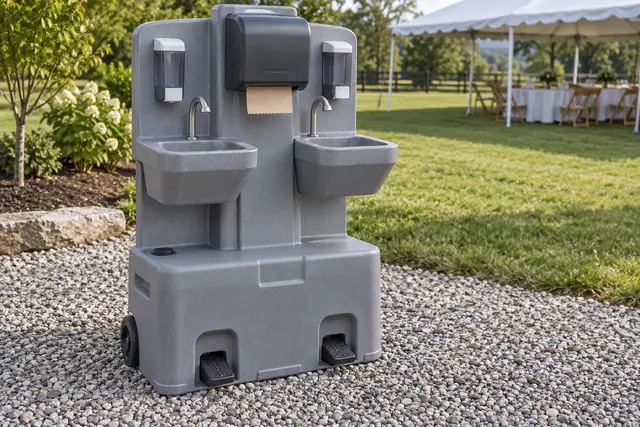
Describe how the station will be used
Explain whether it serves workers, event guests or another group, and when the heaviest use occurs. Keep it on a practical route without blocking restroom doors or forcing users through vehicle movements.
If a food operation is involved, separate general attendee washing from the vendor's particular requirements. The organizer and relevant authority should resolve those requirements; a shared station should not be described as a universal solution.
Agree how supplies are maintained
Ask which water, soap and drying supplies are included and how replenishment is arranged. Choose a site contact who checks conditions and knows how to report depletion. A delivery receipt alone does not show that the station remains usable all day.
Do not refill or empty equipment by improvising a source or disposal point. Follow the provider's approved instructions and keep unrelated waste out of the station.
Keep the station with the users it serves
If toilets or activity areas change, review washing at the same time. A station left behind a new barrier may be visible but practically unavailable. Discuss any move with the provider and update directions so people find the current arrangement.
Questions before you book
Does sanitizer count as a handwashing sink?
They are different facilities. Determine the washing required for the activity rather than treating them as equivalent.
Can several contractors share the station?
Discuss appropriate provision and assign a responsible contact so replenishment is not left to assumption.