
Make the household boundary explicit
If workers will not use the home's bathroom, say so before the job begins. The contractor should not discover that restriction after people arrive. Conversely, a unit ordered for a crew should not automatically be treated as a complete substitute for household facilities.
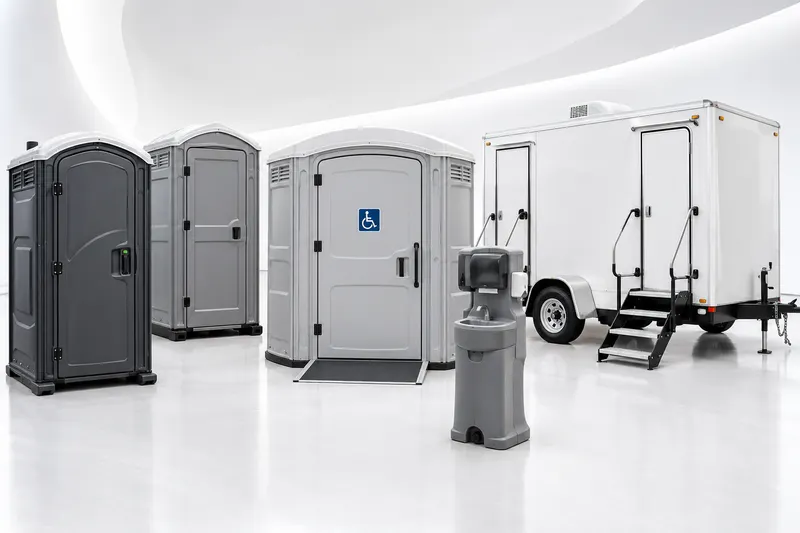
Explain any family access needs separately. A basic cabin, a wider accessible model and a unit with additional features are different options; the label alone does not establish that a particular person can use it comfortably.
Fit the equipment around the improvement itself
Identify which parts of the yard or driveway are changing during the work. A location that looks convenient before excavation, paving or landscaping may occupy the very space the contractor needs next.
Discuss the working area with both the contractor and provider. Choose an approved position outside the planned disturbance, with a practical user approach and service access. Avoid a plan that depends on the homeowner shifting the unit between stages.
Match the rental end to the actual work
For an exterior project, collection may depend on the crew finishing rather than a bathroom being restored indoors. Keep those milestones distinct. If a later trade is still working outside, establish whether it will need the restroom before ending the rental.
Confirm the end-of-use and collection arrangements while the property is still accessible. The last contractor leaving does not itself schedule removal.
Questions before you book
Is a standard unit enough for a home improvement project?
It may suit a straightforward worker need. Compare the actual users, access requirements, washing and agreed service before choosing the category.